Showing posts with label NOAA. Show all posts

Tuesday, July 28, 2015

My Time in the Lab

Have you ever wondered what happens to those plastic bottles and bags you see on the side of the road while you’re driving? Or have you asked yourself how these items can possibly harm a sea turtle or a fish? This summer in the lab, I am researching these questions and more. My name is Katie Veasey, I am a rising junior at Hamilton College majoring in Environmental Studies, and I became interested in the plastic pollution epidemic at a young age, by participating in COA's Beach Sweeps. As COA’s Marine Science Intern, I will be applying my knowledge of environmental science and chemistry to help determine how much plastic is out there that we are not seeing and the detrimental impacts it has on our marine environment.

Once we discard our plastic, we don't think twice about it. Unfortunately, it never really goes away - whether it's in a landfill, the ocean, or in the stomach of a whale, plastic does not biodegrade. Rather, it photodegrades when it is in the environment. When the plastic is exposed to the sun's rays and is agitated from water movement, it breaks down into smaller and smaller pieces that fish and other marine animals can collect and then consume. Other than being harmful to marine life by being confused as food, plastics carry high concentrations of toxic chemicals called Persistent Organic Pollutants (POPs) (Frias et al. 2010). These include PCBs, DDTs, and flame retardants- in other words, not anything you want in your food.

 Clean Ocean Action has launched a research initiative to quantify the presence and abundance of these plastics at our beaches along the Jersey Shore. From Sandy Hook to Cape May, we are analyzing sand and water samples, looking for microplastics polluting these ecologically important areas. Further steps in the study include assessing visible microplastics along the coast and documenting microplastics in New Jersey’s low-trophic level coastal fishes, while promoting citizen action. As COA's Marine Science Intern, I am working on analyzing the samples that have already been processed and helping to process the remaining sand samples. I will be working with the Principal Investigators of this study, Catie Tobin of Clean Ocean Action, Beth Sharack of National Oceanic and Atmospheric Administration (NOAA), and Marine Academy of Science and Technology (MAST) seniors Bobby McLaughlin and Nicolette Runko throughout the summer.

 Follow my blog series throughout the summer for updates from the lab as we discover these microplastics!


Click here for the full overview of our research project: http://cleanoceanaction.org/index.php?id=824

Tuesday, May 26, 2015

Senator Booker Urges NOAA Administrator to Withdraw Seismic IHA

US Senator Booker wrote to Dr. Sullivan, administrator of the National Oceanic and Atmospheric Association, formally requesting that the National Marine Fisheries Service withdraw the Incidental Harassment Authorization needed for the Rutgers seismic study to legally harass marine mammals and reopen the comment period so that concerned organizations and the public are given a meaningful opportunity to review this survey. Senator Booker cited the exponential increase in the number of marine mammals estimated to be harassed and the methodology used to calculate the new numbers as justification for withdrawal of the authorization and a reopening of the comment period. In addition, Senator Booker reiterated his support for the NJDEP’s concerns with the proposed project’s impact on New Jersey’s coastal resources and desire for the ongoing mediation process between the NJDEP and the National Science Foundation (as lead agency for this survey) to conclude before any permits are issued by NOAA.

Clean Ocean Action applauds Senator Booker’s close analysis of the proposed project and its impact on New Jersey’s marine life and economy and is looking forward to Dr. Sullivan’s response.  

Thursday, May 21, 2015

Senator Booker Questions NOAA Director About Rutgers Seismic Study

At a U.S. Senate subcommittee hearing conducted yesterday, May 20, 2015, Senator Cory Booker of New Jersey questioned NOAA Director Kathryn Sullivan about the proposed seismic survey that would occur this Summer off the coast of New Jersey and be performed by Rutgers University inconjunction with the National Science Foundationand the Lamont Dougherty Earth Observatory.  The hearing was conducted by the Oceans, Atmosphere, Fisheries, and Coast Guard subcommittee of the Senate Commerce, Science and Transportation Committee, of which Senator Booker is a member. 

Demonstrating a commitment and concern for our offshore fishing grounds, marine mammals and the processes by which they are to be protected under federal law, Senator Booker expressed “frustration” that, for the second year in a row, the State of New Jersey was denied “its right to a proper consistency review” under federal law by NOAA’s Office of Coastal Management.  The Senator asked Dr. Sullivan to commit staff to facilitating mediation between the New Jersey Department of Environmental Protection (DEP) and the study proponents concerning mitigation measures proposed by the State to reduce the harm threatened by the proposed seismic study.  Dr. Sullivan replied that she appreciated the Senator’s concerns and committed to staying “closely engaged with both [ ] DEP and your staff and, to the degree possible, with the National Science Foundation”.   

Senator Booker expressed further concern with the fact that the science and information concerning the proposed seismic survey is changing, and that no opportunity was being provided for the public to review and comment upon this new information.  The Senator explained that the public notice issued by NOAA’s National Marine Fisheries Service advised that 1,323 marine mammals will be potentially harmed by the proposed seismic study; however, last week, after the public comment period closed, NMFS issued an authorization for the harassment of more than 18,000 marine mammals, including more than 12,000 bottle nosed dolphin.  The Senator called this “a massive increase” and cited the recommendation of the Marine Mammal Commission (an independent federal agency tasked with reviewing such authorizations) for a new public comment period based upon the revised estimates of marine mammals that will be harrased.  Senator Booker asked Dr. Sullivan if she would “commit to exploring the renoticing of this permit application with the correct numbers of the marine mammals to be harassed so . . .  that my constituents can adequately review and comment upon this application.”  Dr. Sullivan replied that she would “certainly commit to look into that change. . . that is news to me, I have not seen those numbers . . . .”

An archived video feed of the hearing is available at:


The above-referenced questions from Senator Booker and responses from Dr. Sullivan can be viewed between the time marks of 39:20 and 44:57.

Monday, March 23, 2015

NJ Seismic Study is Back!

Despite opposition from New Jersey, federal, state, and local officials and thousands of citizens, NOAA Fisheries recently published a proposed Incidental Harassment Authorization in the Federal Register for the taking, harm or harassment, of marine mammals for the seismic survey offshore of New Jersey scheduled for June through August of 2015. This seismic study conducted by Columbia University’s Lamont-Doherty Earth Observatory and National Science Foundation along with University of Texas and Rutgers University lead researchers, was supposed to take place last summer, but due to public opposition and vessel issues, the study was delayed. The authorization allows over 32 marine mammal species, six of which are endangered, to be exposed to seismic air guns and three other acoustic blast technologies, all are known to be harmful to marine life. Clean Ocean Action has been working vigorously to stop this dangerous seismic study and we encourage you to join us in the fight.

Public comments on the Incidental Harassment Authorization can be submitted by April 16th. Instructions on how to send in your comments:

Mail Comments to:
Jolie Harrison
Supervisor, Incidental Take Program
Permits and Conservation Division,
Office of Protected Resources
National Marine Fisheries Service
1315 East-West Highway, Silver Spring, MD 20910.

Email Comments to:
ITP.Cody@noaa.gov.
Please include 0648-XD773 in the subject line.

Thursday, August 29, 2013

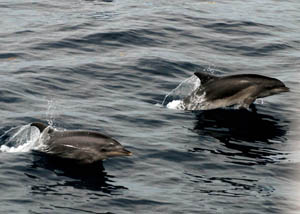
How Are The East Coast Dolphins Doing?

Photo Credit: NOAA
Clean Ocean Action continues to monitor the investigation of recent dolphin deaths off the coast of the Jersey Shore.  Please read our blog entries here and here from earlier this week and August 13, 2013 for more background information on the increase in dolphin deaths this summer.

In a USA Today story dated Tuesday, August 27, Todd Bates reported a total of 357 bottlenose dolphin deaths from early July through Monday August 26, 2013 from New York to North Carolina, according to federal officials. 

NOAA has determined that 32 of 33 dolphins tested from all five states are either suspected or confirmed positive for cetacean morbillivirus, a measles-like virus. For 11 samples, genetic sequencing has confirmed this finding.  Teri Rowles of the federal Marine Mammal Health and Stranding Response Program notes that the outbreak may last into next spring.  She says there is also a risk that the virus may be spreading to other marine mammal species, so researchers are looking into other deaths over the last six months.

“Since July 9, 74 dead or dying dolphins have washed up along New Jersey’s coastline. [Some] have been confirmed with morbillivirus,”according to Bob Schoelkopf, the Marine Mammal Stranding Center’s Executive Director. “[Others] have been tested for the virus, with results of those tests pending,” he said.

Ongoing investigations include the examination of other potential contributing factors, such as, pathogen, biotoxins, changes in habitat, etc.

Rowles added, “at this point, there isn't anything that we can do to stop the virus. We don't have a vaccine that is developed that could be easily deployed in a wild population of bottlenose dolphins or subpopulation of bottlenose dolphins at this point.”

Today, the Christie Administration directed additional state resources toward the investigation of the bottlenose dolphin die-off.  According to a NJDEP press release, “these steps include using Department of Environmental Protection (DEP) aircraft and expanding patrols by DEP conservation officers. The Administration is also providing the use of a Department of Agriculture lab for testing, a move that will greatly help the nonprofit Marine Mammal Stranding Center, on the front lines of responding to the deaths since early July.”

According to scientists, the 2013 dolphin die-off comes 25 years after over 740 bottlenose dolphins died along the coast from New Jersey to Florida from 1987-88.  Morbillivirus was eventually linked to their deaths as well (Reference: Lipscomb et al. 1994).

Clean Ocean Action will continue to follow this story and provide up-to-date information on the status of the investigation of the dolphin die-off in the Atlantic.

For more information visit:

Monday, August 26, 2013

What's Going on With Bottlenose Dolphins in the Mid-Atlantic?

NOAA Declares 'Unusual Mortality Event' for Bottlenose Dolphins in the Mid-Atlantic

Danielle Monaghan, a staffer at the Marine Mammal Stranding Center in Brigantine N.J.,  photographs a dead dolphin that washed ashore Wednesday, Aug. 21, 2013, in Spring Lake N.J. This dolphin was the 63rd to die on New Jersey's shores since early July. (AP Photo/Wayne Parry) / AP


The National Oceanic and Atmospheric Administration (NOAA) declared an Unusual Mortality Event for bottlenose dolphins in the Mid-Atlantic region from early July 2013 to the present. An Unusual Mortality Event, as stated by the Marine Mammal Protection Act of 1972, is defined as a “stranding that is unexpected; involves a significant die-off of any marine mammal population; and demands immediate response.” This declaration will provide scientists with additional research funding in order to find the root cause of the deaths.

NOAA Graph: http://www.nmfs.noaa.gov/pr/health/mmume/midatldolphins2013.html

Since early July, there has been 71 dolphin strandings along the Jersey Coast. Strandings have been reported along the Mid-Atlantic coastline with almost 300 washups from New York to Virginia.  Virginia has reported the highest numbers of strandings at 64.

NOAA Graph: http://www.nmfs.noaa.gov/pr/health/mmume/midatldolphins2013.html


According to NOAA, “all age classes of bottlenose dolphins are involved” and, “Currently, there are no unifying gross necropsy findings although several dolphins have presented with pulmonary lesions.”

Preliminary results indicate that some of the dolphins had pneumonia, while another tested positive for Morbillivirus, a measles-like virus.  However, the underlying cause of the deaths is still under investigation.  Other potential causes that are being researched include “other diseases or pathogens caused by viruses or bacteria; biotoxins caused by harmful algae blooms; pollution or chemicals, especially from concentrated spills; ship strikes; or acoustic trauma from ships or other infrastructure.”

The symptoms of Morbillivirus involves deteriorating body condition along with prominent lesions on the lungs and central nervous tissues. This disease also causes secondary infections, such as pneumonia.  What is most concering about Morbillivirus is that it is an airborne virus. This means the virus is easily spread between dolphins, who generally stay together in pods, through their normal breathing activities. The Morbillivirus has been known to affect species of dolphins in the past 20 years with one notable event occurring along the Mid-Atlantic coast in the 1980s in which 742 dolphins presented with the virus.

Matthew Huelsenbeck, a marine scientist at the nonprofit Oceana, pointed out that “most of the East Coast dolphin deaths have occurred in areas with heavy human footprints, like the Chesapeake Bay.”

The New Jersey Department of Environmental Protection has stated that there is no correlation between the deaths and the water quality which “has been excellent this summer,”suggesting that instead, it is an indication of a “natural disease cycle.” However, dolphins are known to accumulate toxins into their bodies, and NOAA’s marine mammal biologist, Trevor Spradlin, pointed out that “many bottlenose dolphins live on the same coasts and eat the same fish that we do,” so this could mark something greater than a natural disease cycle and is cause for concern.

Perry Habecker, chief of large-animal pathology at the University of Pennsylvania, stated that “’human interaction’- such as aggressive commercial fishing, toxic wastes, and even plastic bags- can contribute to spikes of mortality in marine-mammal populations such as whales, seals and dolphins.” But, for now, the primary cause of the deaths has yet to be identified.  Scientists will know more once they run diagnostic tests on tissue and blood samples.  Click here for updates from NOAA.  

How can you help? 

If you see a stranded dolphin, do not touch it.  Alert local officials and keep pets away from the animal.  Also, in NJ, contact the Marine Mammal Stranding Center at 1-609-266-0538 or click here for other statesin the Mid-Atlantic region.  

This blog post is an updated version of an entry posted by COA on Tuesday, August 13.  Read that post here.