Showing posts with label bottlenose dolphins. Show all posts

Tuesday, May 19, 2015

Airgun Blasting Risks Blasting Marine Mammal Populations

As soon as June 1st, Rutgers University intends to begin a seismic study approximately 15 miles off of the coast of Long Beach Island, New Jersey. The study has been approved by the National Marine Fisheries Service (NMFS), which has permitted the “takings” of 18,457 marine mammals— 26 times more mammals than originally proposed — during the 30-day research period so long as these incidents are classified as “Level B Harassment” under the Marine Mammal Protection Act. However, there is no scientific way to observe and assess all of the physical and physiological damage done to the populations of marine mammals to ensure that these damages do not surpass Level B Harassment into Level A Harassment.

According to the MMPA, Level B Harassment is defined as “any act of pursuit, torment, or annoyance which has the potential to disturb a marine mammal stock in the wild by causing disruption of behavioral patterns including, but not limited to, migration, breathing, nursing, breeding, feeding, and sheltering, but which does not have the potential to injure a marine mammal stock in the wild.” This means the marine mammals that frequent waters off of the New Jersey coast this time of year will experience meaningful disruption to “biologically significant” activities, including, ­but not limited to­, migration, breeding, care of young, predator avoidance or defense, and feeding.

“Biologically significant” can be widely interpreted, but would encompass anything that affects the ability of an animal to grow, survive, and reproduce. Essentially, NMFS has given Rutgers the approval to cause harm to marine mammals off of the New Jersey coast so long as it does not harm enough of the population to cause what they would consider a steep decline in their numbers. In a few cases, the mammals they have permitted takings of are already on the endangered species list, such as Sei Whales and North Atlantic Right Whales, just to name a few. Their identification as endangered means that these species have been categorized by the International Union for Conservation as likely to become extinct, meaning that they are second only to the most severe conservation status, “critically endangered.”

The takings have been termed “insignificant” by NMFS, but the numbers that were approved tell a different story. NMFS has authorized the take of five Sei whales, which would make up nearly 1.5% of the mammal’s stock. This number might not seem significant at first, but when you consider the Sei whale’s current status as endangered under the Endangered Species Act, this number is appalling. Harm to even one animal that has been identified as endangered can negatively impact the longevity of its entire population worldwide.

Approved Dolphin Takes and Overall Impact on Species Population
Species
Authorized Take
Percent of Species Stock
Bottlenose dolphins
12,532
16.16
Atlantic spotted dolphins
4,067
18.19
Risso’s dolphins
1,532
16.79

While the above table only shows the population and take numbers of three dolphin species, there are 29 more species that will be harmed, totaling 18,457 marine mammals including those dolphin species.  While the authorized torment of over 18,131 dolphins alone is unconscionable, this number becomes even more substantial when considering the recent morbillovirus that decimated bottlenose dolphin populations in the Atlantic, killing 1,660 dolphins between 2013 and 2015 alone. These dolphin populations, already in decline due to the devastating virus, will be put even more at risk after being subjected to unnecessary and inescapable airgun blasts during their peak mating season. The approved harassment numbers only get worse from there. The warm summer months are peak migration and mating times for marine mammals off of the coast of New Jersey, meaning that their populations will be even more heavily impacted than they would if these studies were conducted in the cooler winter months. 

Allowing for the harm, harassment, or torment of 18,457 marine mammals, 26 times more than proposed last year, is inexcusable. Please call or email Rutgers University President Barchi urging him to cancel the seismic study to avoid harm to marine mammals during peak summer months for migration and breeding.

Call: 848-932-7454

Join close to 20,000 concerned citizens opposing Rutgers Ocean blasting - sign our petition today!



Thursday, August 29, 2013

How Are The East Coast Dolphins Doing?

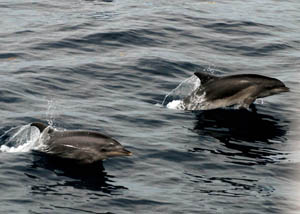
Photo Credit: NOAA
Clean Ocean Action continues to monitor the investigation of recent dolphin deaths off the coast of the Jersey Shore.  Please read our blog entries here and here from earlier this week and August 13, 2013 for more background information on the increase in dolphin deaths this summer.

In a USA Today story dated Tuesday, August 27, Todd Bates reported a total of 357 bottlenose dolphin deaths from early July through Monday August 26, 2013 from New York to North Carolina, according to federal officials. 

NOAA has determined that 32 of 33 dolphins tested from all five states are either suspected or confirmed positive for cetacean morbillivirus, a measles-like virus. For 11 samples, genetic sequencing has confirmed this finding.  Teri Rowles of the federal Marine Mammal Health and Stranding Response Program notes that the outbreak may last into next spring.  She says there is also a risk that the virus may be spreading to other marine mammal species, so researchers are looking into other deaths over the last six months.

“Since July 9, 74 dead or dying dolphins have washed up along New Jersey’s coastline. [Some] have been confirmed with morbillivirus,”according to Bob Schoelkopf, the Marine Mammal Stranding Center’s Executive Director. “[Others] have been tested for the virus, with results of those tests pending,” he said.

Ongoing investigations include the examination of other potential contributing factors, such as, pathogen, biotoxins, changes in habitat, etc.

Rowles added, “at this point, there isn't anything that we can do to stop the virus. We don't have a vaccine that is developed that could be easily deployed in a wild population of bottlenose dolphins or subpopulation of bottlenose dolphins at this point.”

Today, the Christie Administration directed additional state resources toward the investigation of the bottlenose dolphin die-off.  According to a NJDEP press release, “these steps include using Department of Environmental Protection (DEP) aircraft and expanding patrols by DEP conservation officers. The Administration is also providing the use of a Department of Agriculture lab for testing, a move that will greatly help the nonprofit Marine Mammal Stranding Center, on the front lines of responding to the deaths since early July.”

According to scientists, the 2013 dolphin die-off comes 25 years after over 740 bottlenose dolphins died along the coast from New Jersey to Florida from 1987-88.  Morbillivirus was eventually linked to their deaths as well (Reference: Lipscomb et al. 1994).

Clean Ocean Action will continue to follow this story and provide up-to-date information on the status of the investigation of the dolphin die-off in the Atlantic.

For more information visit:

Monday, August 26, 2013

What's Going on With Bottlenose Dolphins in the Mid-Atlantic?

NOAA Declares 'Unusual Mortality Event' for Bottlenose Dolphins in the Mid-Atlantic

Danielle Monaghan, a staffer at the Marine Mammal Stranding Center in Brigantine N.J.,  photographs a dead dolphin that washed ashore Wednesday, Aug. 21, 2013, in Spring Lake N.J. This dolphin was the 63rd to die on New Jersey's shores since early July. (AP Photo/Wayne Parry) / AP


The National Oceanic and Atmospheric Administration (NOAA) declared an Unusual Mortality Event for bottlenose dolphins in the Mid-Atlantic region from early July 2013 to the present. An Unusual Mortality Event, as stated by the Marine Mammal Protection Act of 1972, is defined as a “stranding that is unexpected; involves a significant die-off of any marine mammal population; and demands immediate response.” This declaration will provide scientists with additional research funding in order to find the root cause of the deaths.

NOAA Graph: http://www.nmfs.noaa.gov/pr/health/mmume/midatldolphins2013.html

Since early July, there has been 71 dolphin strandings along the Jersey Coast. Strandings have been reported along the Mid-Atlantic coastline with almost 300 washups from New York to Virginia.  Virginia has reported the highest numbers of strandings at 64.

NOAA Graph: http://www.nmfs.noaa.gov/pr/health/mmume/midatldolphins2013.html


According to NOAA, “all age classes of bottlenose dolphins are involved” and, “Currently, there are no unifying gross necropsy findings although several dolphins have presented with pulmonary lesions.”

Preliminary results indicate that some of the dolphins had pneumonia, while another tested positive for Morbillivirus, a measles-like virus.  However, the underlying cause of the deaths is still under investigation.  Other potential causes that are being researched include “other diseases or pathogens caused by viruses or bacteria; biotoxins caused by harmful algae blooms; pollution or chemicals, especially from concentrated spills; ship strikes; or acoustic trauma from ships or other infrastructure.”

The symptoms of Morbillivirus involves deteriorating body condition along with prominent lesions on the lungs and central nervous tissues. This disease also causes secondary infections, such as pneumonia.  What is most concering about Morbillivirus is that it is an airborne virus. This means the virus is easily spread between dolphins, who generally stay together in pods, through their normal breathing activities. The Morbillivirus has been known to affect species of dolphins in the past 20 years with one notable event occurring along the Mid-Atlantic coast in the 1980s in which 742 dolphins presented with the virus.

Matthew Huelsenbeck, a marine scientist at the nonprofit Oceana, pointed out that “most of the East Coast dolphin deaths have occurred in areas with heavy human footprints, like the Chesapeake Bay.”

The New Jersey Department of Environmental Protection has stated that there is no correlation between the deaths and the water quality which “has been excellent this summer,”suggesting that instead, it is an indication of a “natural disease cycle.” However, dolphins are known to accumulate toxins into their bodies, and NOAA’s marine mammal biologist, Trevor Spradlin, pointed out that “many bottlenose dolphins live on the same coasts and eat the same fish that we do,” so this could mark something greater than a natural disease cycle and is cause for concern.

Perry Habecker, chief of large-animal pathology at the University of Pennsylvania, stated that “’human interaction’- such as aggressive commercial fishing, toxic wastes, and even plastic bags- can contribute to spikes of mortality in marine-mammal populations such as whales, seals and dolphins.” But, for now, the primary cause of the deaths has yet to be identified.  Scientists will know more once they run diagnostic tests on tissue and blood samples.  Click here for updates from NOAA.  

How can you help? 

If you see a stranded dolphin, do not touch it.  Alert local officials and keep pets away from the animal.  Also, in NJ, contact the Marine Mammal Stranding Center at 1-609-266-0538 or click here for other statesin the Mid-Atlantic region.  

This blog post is an updated version of an entry posted by COA on Tuesday, August 13.  Read that post here.