Showing posts with label Mid-Atlantic Bight. Show all posts

Thursday, March 20, 2014

Action Alert: Stop Seismic Testing Off New Jersey!


Despite the efforts of New Jersey elected officials, concerned citizens, and organizations like yours to close the door on seismic testing off our shores, we are now facing yet another seismic threat – this time right at our doorstep and happening already this summer.

Researchers at Columbia University’s Lamont-Doherty Earth Observatory (L-DEO), in collaboration with the National Science Foundation (NSF), have proposed a study of seafloor sediments 15 miles off the Barnegat Bay to better understand historical changes in sea level from 60 million years ago through the present.  The researchers propose to use powerful seismic airgun arrays to shoot blasts of compressed air deep into the seabed, similar to the process used to locate buried oil and gas deposits.  Furthermore, the airgun blasting would endure for 720 hours over a 30-day period.  The L-DEO researchers have requested authorization from the National Marine Fisheries Service (NMFS) to “take” (i.e., harass) individuals from 26 marine mammal species during its study, which was conditionally granted on Monday, March 17 in a federal register notice of the proposed incidental harassment authorization.  The proposed authorization is an evaluation of information provided by L-DEO regarding its potential impacts on marine mammals and NMFS’s ultimate approval, despite evidence linking seismic activities to harm.

Proposed location off Barnegat Bay
The proposed authorization acknowledges the scarcity of data at several points throughout its discussion of potential impacts of seismic activity on marine mammals and other animals, yet it consistently writes off the impacts as negligible.  For example, the proposal states: “The sound criteria used to estimate how many marine mammals might be disturbed to some biologically-important degree by a seismic program are based primarily on behavioral observations of a few species…for many species there are no data on responses to marine seismic surveys.”  Given that 26 marine mammal species could potentially be impacted by this survey, 6 of which are listed as endangered under the Endangered Species Act, it is concerning to see NMFS gloss over impacts in the absence of hard data instead of taking a more precautionary approach.

Furthermore, the proposed authorization references information that is irrelevant or even incorrect, and several instances of “cut and paste” from previously issued authorizations are evident.  For example, at one point, the notice states, “Additionally, no beaked whale species occur in the proposed seismic survey area,” even though earlier in the notice, six species of beaked whale are listed as potentially occurring in the proposed study area.  How can we rely on NMFS’s evaluation of impacts to marine mammals from this proposed seismic survey, when entire groups of marine mammals are erroneously omitted from their analysis?

Clean Ocean Action has already begun to develop its response to this proposal to blast the ocean with seismic airguns in the name of scientific research.  We first sent a letter to NMFS with over 30 signatories to request a 60-day extension to the 30-day comment period and a public hearing.  NMFS responded to COA on April 9th with the news that the comment period has been extended by 30 days, with a new deadline of May 16th; however, COA is still pushing for the full 60-day extension and a public hearing.  We are currently drafting detailed comments on the proposed authorization for submission to NMFS.

Seismic airguns, whatever the reason for their use, can have devastating impacts to cherished marine mammal species and vital coastal industries, including commercial and recreational fisheries and tourism.  Join Clean Ocean Action in defending our precious coastal resources from the far-reaching impacts of seismic testing.

Call on your local elected officials to pass a resolution opposing seismic testing – no matter the location or objective.

Click here for our fact sheet on this issue.

Please call Clean Ocean Action at 732.872.0111 or email Cassandra Ornell at science@cleanoceanaction.org with questions.  To get involved, email Lauren Townsend at ltownsend4@gmail.com. The clock is ticking…

Thursday, August 29, 2013

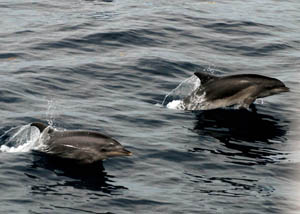
How Are The East Coast Dolphins Doing?

Photo Credit: NOAA
Clean Ocean Action continues to monitor the investigation of recent dolphin deaths off the coast of the Jersey Shore.  Please read our blog entries here and here from earlier this week and August 13, 2013 for more background information on the increase in dolphin deaths this summer.

In a USA Today story dated Tuesday, August 27, Todd Bates reported a total of 357 bottlenose dolphin deaths from early July through Monday August 26, 2013 from New York to North Carolina, according to federal officials. 

NOAA has determined that 32 of 33 dolphins tested from all five states are either suspected or confirmed positive for cetacean morbillivirus, a measles-like virus. For 11 samples, genetic sequencing has confirmed this finding.  Teri Rowles of the federal Marine Mammal Health and Stranding Response Program notes that the outbreak may last into next spring.  She says there is also a risk that the virus may be spreading to other marine mammal species, so researchers are looking into other deaths over the last six months.

“Since July 9, 74 dead or dying dolphins have washed up along New Jersey’s coastline. [Some] have been confirmed with morbillivirus,”according to Bob Schoelkopf, the Marine Mammal Stranding Center’s Executive Director. “[Others] have been tested for the virus, with results of those tests pending,” he said.

Ongoing investigations include the examination of other potential contributing factors, such as, pathogen, biotoxins, changes in habitat, etc.

Rowles added, “at this point, there isn't anything that we can do to stop the virus. We don't have a vaccine that is developed that could be easily deployed in a wild population of bottlenose dolphins or subpopulation of bottlenose dolphins at this point.”

Today, the Christie Administration directed additional state resources toward the investigation of the bottlenose dolphin die-off.  According to a NJDEP press release, “these steps include using Department of Environmental Protection (DEP) aircraft and expanding patrols by DEP conservation officers. The Administration is also providing the use of a Department of Agriculture lab for testing, a move that will greatly help the nonprofit Marine Mammal Stranding Center, on the front lines of responding to the deaths since early July.”

According to scientists, the 2013 dolphin die-off comes 25 years after over 740 bottlenose dolphins died along the coast from New Jersey to Florida from 1987-88.  Morbillivirus was eventually linked to their deaths as well (Reference: Lipscomb et al. 1994).

Clean Ocean Action will continue to follow this story and provide up-to-date information on the status of the investigation of the dolphin die-off in the Atlantic.

For more information visit:

Monday, December 17, 2012

NJ Bill to Reduce Plastic Bag Pollution and Support Barnegat Bay Passes Committee


NJ Bill to Reduce Plastic Bag Pollution and Support Barnegat Bay Passes Committee

Photo Credit: http://www.seaturtle.org/imagelib/?photo=4364


(Trenton, New Jersey) – Clean Ocean Action testified before the Senate Environment and Energy Committee  in general support of Senate Bill 812, the “Carryout Bag Reduction and Recycling Act,” a bill that would provide financial incentives to reduce the number of paper and plastic carryout bags distributed by stores.  The bill proposes that the funds generated would be directed to help improve water quality in Barnegat Bay and passed in Committee today.  However, COA urged that in the short term, a substantial portion of the proceeds go toward removing massive debris fields in the marine environment caused by Sandy.

The bill, sponsored by Senator Bob Smith, Chairman of the Committee, would require the operator of every convenience store, drugstore, supermarket or retail establishment that provides carryout bags to its customers to implement a $0.05 fee for every carryout bag distributed beginning January 1, 2014.   Additional incentives encourage customers to bring reusable bags.

Twice each year, Clean Ocean Action holds state-wide Beach Sweeps where volunteers from across New Jersey gather at over 70 locations from Cape May to Essex County, recording and tallying data of the amount of debris collected.  According to Clean Ocean Action’s Beach Sweeps report for 2011, 8,245 plastic shopping bags were collected in just two days (by 7,575 volunteers).


Testifying on behalf of COA, Zach McCue, Citizen Action Coordinator said, “While plastic bags may not be the number one item collected during beach sweeps, they still contribute significantly to the unnecessary amount of waste on our shores.  This bill takes action to reduce needless pollution while starting a much needed dialogue on the public’s usage of single use disposable plastic.”

Reducing the use of single use bags with financial incentives will dramatically reduce the consumption of plastic bags, as well as provide resources for reducing pollution. Many business leaders in NJ are already encouraging people to bring their own bags.  A statewide reduction of plastic bag use is necessary to ensure this law is fair and effective.

“According to Beach Sweep data, we have noticed an apparent decline in smoking related debris with the increase of smoking bans in public places,” stated Tavia Danch, Clean Ocean Action Education Coordinator.  “We are hoping to see a similar result with a plastic bag reduction law.  In addition, the purchase of cigarettes includes fees which help fund programs to improve public health.  Similarly, this Bag Reduction law will direct the funds generated by this environmental threat to help improve water quality,” added Danch. 
Clean Ocean Action supports, S812, in general with initial recommendations and may have further suggestions.  For the first 5 years, allowing a substantial portion of the revenues generated by the bill should be used to help municipalities fund the clean-up of marine debris caused by Hurricane Sandy, including communities of the Barnegat Bay.  Much of the debris, including displaced boats, cars, and refrigerators, are hazardous to habitats and wildlife and contain toxins. The price of cleaning shorelines and waterways may cost millions of dollars and funds from S812 could help defray those costs.

Following the initial 5 years, funds should then be directed solely to the Barnegat Bay to improve water quality.  After 10 years from passage, the bill should require a reassessment of funding structures to consider future needs to improve water quality.  Clean Ocean Action is also concerned with the enforceability of the bill, and asked the Committee to put measures in place to assure that the NJDEP will enforce the provisions and produce the reports that are stipulated in the bill.

“We are encouraged that NJ may join the growing efforts in the US and around the world to reduce this harmful, and avoidable source of pollution, waste, and litter, as well as fund important work to improve water quality,” said Cindy Zipf, Executive Director of COA.

Tuesday, November 20, 2012

CALL FOR PROJECTS – FORTHESHORE.ORG


CLEAN OCEAN ACTION’S WAVES OF ACTION DAY
NY/NJ First Wave of Action Day Set for Saturday, December 8, 2012

In the aftermath of the storm, there is a tremendous response from volunteers region-wide who have dedicated their time and efforts to help those affected and in need.  In the spirit of the organic volunteer effort that has grown in the wake of Hurricane Sandy, Clean Ocean Action, in partnership with organizations from across New York and New Jersey, are calling on members of the community to coordinate relief effort projects for the first “Waves of Action” day on Saturday, December 8. 

The first Waves of Action Day on Saturday, December 8, is looking for community leaders to become project leaders by registering their task online and facilitating the volunteers that respond.  Types of projects can include: beach, town, and park clean-ups; food, household items, and furniture drives; fundraisers for wildlife and communities in need; and/or home clean out and repair.  The projects will vary based on real, on the ground needs. 

“In the aftermath of Sandy it is evident that all communities were impacted differently,” commented Tavia Danch, Clean Ocean Action’s Education Coordinator.  “‘For the Shore’ is a way to connect projects with people” added Danch.

A call for volunteers is going out as well, to match those in need with people looking to help.  To register for a project, visit www.fortheshore.org or contact Clean Ocean Action at
732 872-0111.

Clean Ocean Action education and advocacy volunteer, Kathleen Gasienica said, “Like many others I have an overwhelming feeling of wanting to help the people in the coastal areas who were devastated by the storm.  Thanks COA for your Day of Action and for giving me the opportunity to help where it is most needed and encouraging the restoration efforts after the television crews have all gone home.”

The Waves of Action day will begin a restoration program “For the Shore” to help initial relief efforts for our community beaches, neighborhoods, and businesses in the wake of Hurricane Sandy.  Future Waves of Action days will evolve with the needs of communities and keep the momentum going for continued improvement of the shore through debris clean ups and projects to improve water quality.

“It has been inspiring to see the response to the devastation, but the journey to restore the shore will be long. We established this program to provide a longer-term strategy to help heal our coastal communities,” said Clean Ocean Action Executive Director Cindy Zipf.

Already making waves, planned projects include clearing trails and debris at the Evelyn Alexander Wildlife Rescue Center, cleaning up Munns Pond County Park, (both in Hampton Bays, NY), a dune restoration project in Midway Beach, South Seaside Park, NJ, and many others.

“The Evelyn Alexander Wildlife Rescue Center was hit hard by Superstorm Sandy.  All of our resources are being used to care for the influx of exhausted seabirds blown in from the storm, so little time is available to clear our nature trails,” stated Ginnie Frati, Executive Director of The Evelyn Alexander Wildlife Rescue Center.  “We are so appreciative of Clean Ocean Action for helping us plan this day, and for all the good work they do for the environment.”

Projects being confirmed and posted on ForTheShore.org include December 8 events by Surfrider chapters, Sierra Club chapters, NY/NJ Baykeeper, and NJ Watershed Ambassadors.

Krissy Halkes, Chair of the South Jersey Chapter of Surfrider Foundation noted that her chapter “has been organizing cleanups every weekend since Hurricane Sandy devastated our beautiful beach towns and we look forward to participating in Clean Ocean Action's Wave of Action on the 8th.”

To register a project visit www.fortheshore.org or contact Clean Ocean Action at
732-872-0111. 

In the interim, for current relief efforts and needs, visit COA’s blog: www.cleanoceanaction.blogspot.com – UPDATED DAILY -- for volunteer opportunities throughout NJ and NY.

Friday, October 26, 2012

Hurricane Sandy: A Warning Against Future Offshore Industrialization


Hurricane Sandy is advancing north toward the Mid-Atlantic.  

Although the projected paths vary on where the storm will hit land, it is clear that if we allow offshore energy projects like LNG terminals and Offshore Oil Drilling the ocean would be MORE at risk and the potential impacts (economic and environmental) to our coastal areas would greatly increase.

Oil and gas exploration plans are underway from mid-Florida to the southern tip of New Jersey with deafening seismic sonar surveys expected to begin next year - blasting deafening sound waves across the seafloor (killing, harming, and dispersing all forms of marine life (to varying degrees)).  There are active proponents in Virginia who want to see oil rigs off their coast ASAP. 

Similarly, Liquefied Natural Gas Terminals have been proposed off the New Jersey and New York coasts.  These facilities would be the docking sites of giant tanker ships carrying vast quantities of concentrated energy.

Across the Gulf of Mexico region, hurricanes have damaged and destroyed rigs and pipeline ports - resulting in oil spills and debris that have destroyed coastal ecosystems (anyone remember the BP Deepwater Horizon?!?).  Billion dollar coastal economies of the Atlantic Coast that depend on clean oceans would be jeopardized.  

YOU get help protect our coasts and industry-free oceans by supporting the Clean Ocean Zone and COA as we continue to fight these offshore energy threats to our oceans!

Help us keep these industries out of the ocean so that the next time we're facing yet another major storm, we're not also living with the fear of an offshore energy disaster!

More on Hurricane Sandy

Please take care and prepare for the storm.


Useful links on the looming offshore energy threat:


Friday, October 5, 2012

New Mapping Tool Released for Ocean Planning in the Mid-Atlantic

The Mid-Atlantic Regional Council on the Ocean (MARCO) recently released a new Ocean Data Portal that is in development.  This data portal includes information on ocean life, human uses of the ocean, sea floor topography, habitat, and sediments, as well as ocean regulations.  The Mid-Atlantic Ocean Region includes coastal and offshore waters from Virginia to New York.  The data and mapping portal will serve as a resource for ocean planning efforts in the region.  The mapping capabilities make it easier to visualize and understand multiple layers of information together.  If you have data or information, high priority data needs have been identified here.  If you use the ocean or have an interest in how the ocean may be used in the future - check it out and provide your thoughts and insights by clicking on feedback! (Note: the Proposed Atlantic Wind Connection is shown under renewable energy. This potential transmission line will also transmit conventional, dirty fossil fuel energy. See prior blog on this project which we've termed the Atlantic Coal Connection.)